The COSEE NOW team along with colleagues Catherine Halversen (COSEE CA), Bob Chen (COSEE OCEAN), and Annette deCharon and Carla Companion (COSEE Ocean Systems) recently held a workshop for early career scientists called GEARS. The GEARS program is designed to help scientists effectively communicate the broader impacts of their work. The program offers a range […]
Archive | Education Materials
Quality lesson plans, activities, and other materials for formal and informal educators from the NOW community.
Fish Oils and Nutrition
This Fish Oil-Lesson Plan was developed in partnership with Anita Brinker from the Institute for Food, Nutrition and Health at Rutgers University and used to help high school students understand the health benefits of fish oils. This lesson was used with high school students in the 4-H Summer Science program.
Summer is for Sand Castles
In this lesson, students participate in a sand castle building contest to learn how sand is formed and how sand grain size varies along the beach. This lesson was recently developed by Kristin Hunter Thomson and Kyle Richter for the 4-H Summer Science program. Students worked in teams to build castles along a transect from […]
Nature of Science Lesson
What is science? This can be a difficult question to answer. Science is often taught from a historical perspective to understand what scientists have learned and discovered. Laboratories often focus on skills development and lose sight of big picture of how science works. This lesson will help introduce students to a variety of essential skills […]
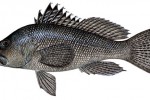
Black Sea Bass Encounter
This activity is intended to help students understand how fisheries scientists collect and analyze data about the local fish populations. Through a simulate field seasons, students are exposed to what fish science in the field looks like. Also, students must analyze their data and compare it with the 40 years of actual Black Sea Bass […]

Move It Or Lose It – Fish Migration Game
Make connections between the physical characteristics of an environment and the organisms that inhabit it by having students engage in a kinetic game interpreting ocean temperature data while role playing a fish with specific physical water requirements in a game that simulates one year in time.

Seasonality in the Ocean
Using ocean data products, students will explore the relationship between seasons as we observe them on land and seasons in the ocean. Working in pairs or small groups, students will be challenged to explain the differences and similarities seen within the ocean data to their experiences with continental seasons.

Sea 3-D
Not only do physical characteristics of ocean water change over horizontal distance, they also change with depth. Students use a model simulating the three-dimensional aspects of the ocean to create a cross section of the water column. This is done to visually define the idea of a cross section, and to familiarize students with looking […]

The Carbon Cycle Game
This kinetic game has students take a trip through some of the reservoirs in the carbon cycle helps them experience sources and sinks, fluxes, and residence time. This provides an experience for putting basic scientific concepts like photosynthesis and respiration in the context of larger biogeochemical cycles and framing conservation of matter. Understanding the carbon […]

Water Density and the Ocean
Students will create water samples with different temperatures and salinities, and then compare their sample with a partner’s in a tank. Once they finish observing the behavior of their samples, they will make some density calculations and explain their observations in terms of density. Discuss as a group what effects changing properties such as temperature […]